

Caribbean Stud Poker by Evolution is a live-dealer, five-card poker game in which players compete against the dealer rather than one another. Each player receives a complete hand before deciding whether to fold or place an additional wager worth twice the Ante. The dealer must qualify with Ace-King or better before the normal Play payout schedule applies.
The game reports a 96.30% optimal theoretical main-game RTP and a 98.19% optimal RTP on total wager. Two optional side bets, the 5+1 Bonus and Progressive Jackpot, introduce separate winning conditions, payout tables and house advantages. This review examines the rules, betting exposure, poker hand rankings and practical differences between the available wagers on 789Bingo.
What is Caribbean Stud Poker by Evolution?
Caribbean Stud Poker by Evolution was introduced in 2015 through a development partnership with Games Marketing. The live-dealer format adapts traditional five-card stud poker into a house-banked game where multiple participants can play simultaneously. Each participant makes independent decisions and receives settlement based on their own hand against the dealer.
Unlike multiplayer poker, Caribbean Stud Poker by Evolution does not involve a shared pot, community cards or betting rounds between competing players. Its central decision occurs after the initial deal, when players can inspect all five cards and choose whether to continue.
Key Features of Caribbean Stud Poker by Evolution
Specification | Game Details |
Game Title | Caribbean Stud Poker |
Software Provider | Evolution |
Original Launch | 2015 |
Development Partner | Games Marketing |
Game Category | Live Casino / Live Dealer Poker |
Game Format | Five-card dealer-versus-player poker |
Deck | One standard 52-card deck |
Jokers | None |
Deck Shuffling | After every completed round |
Player Cards | Five face-up cards |
Dealer Cards | One face-up, four face-down |
Mandatory Initial Wager | Ante |
Continuation Wager | Play 2x the Ante |
Player Decisions | Play or Fold |
Dealer Qualification | Ace-King or better |
Optimal Theoretical Main-Game RTP | 96.30% |
Optimal RTP on Total Wager | 98.19% |
5+1 Bonus RTP | 91.44% |
Progressive Jackpot RTP | 81.84% |
Maximum Main Play Payout | 100:1 |
Maximum Listed 5+1 Bonus Payout | 1,000:1 |
Betting Limits | Check the active 789Bingo table |
One distinguishing characteristic is the game’s decision-based betting structure. Players start with an Ante, but continuing requires another wager equal to twice that amount. Consequently, the initial stake represents only one-third of the total main-game commitment when a player chooses Play.
The game also introduces a dealer qualification rule that can change how an otherwise winning poker hand pays. Players must understand this condition before interpreting the payout table, especially when evaluating premium hands such as a Straight Flush or Royal Flush.
Caribbean Stud Poker by Evolution RTP and House Edge
Caribbean Stud Poker by Evolution publishes two theoretical return figures for its main game: 96.30% and 98.19%. These percentages use different wagering bases, so they should not be treated as competing estimates of the same calculation.
The 98.19% figure reflects optimal theoretical return measured against total main-game wagering. This calculation accounts for the mandatory Ante and the additional Play wagers placed on hands that continue. Achieving the theoretical optimum requires mathematically appropriate Play and Fold decisions.
RTP Comparison Across Main and Optional Wagers
Wager Type | Theoretical RTP |
Main Game — Optimal Theoretical RTP | 96.30% |
Main Game — Optimal RTP on Total Wager | 98.19% |
5+1 Bonus | 91.44% |
Progressive Jackpot | 81.84% |
The 98.19% total-wager figure corresponds to a theoretical house advantage of 1.81% on that same wagering basis. It does not mean a player will recover 98.19% of an individual deposit, nor does it guarantee a particular result after a fixed number of rounds.
The optional wagers carry separate RTP figures because they evaluate different combinations and follow different payout rules. Their headline prizes may be substantially larger than ordinary main-game payouts, but larger potential winnings do not imply a higher theoretical return.
Why Play and Fold Decisions Affect RTP
Caribbean Stud Poker by Evolution differs from live casino games where every completed bet settles automatically without another player decision. The five cards in the player’s hand, together with the dealer’s exposed card, provide information that may influence whether continuing is mathematically justified.
Always choosing Play is not an optimal approach. Folding every hand also fails to use the available information appropriately. Borderline hands, particularly those involving Ace-King high-card combinations, may depend on the remaining kickers and the dealer’s exposed rank.
The reference information does not include a complete mathematically optimal Play/Fold decision chart. Therefore, neither the published RTP figures nor the general advice in this review should be interpreted as a complete strategy for reproducing the theoretical optimum.
Poker Hand Rankings and Payout Table
Caribbean Stud Poker by Evolution follows standard five-card poker hand rankings, with a Royal Flush at the top and High Card at the bottom. Players receive five cards without an opportunity to draw replacements, so the initial hand determines the available combination for the main game.
However, the strength of a player’s hand alone does not establish the final payout. The dealer must first qualify, and the player’s hand must then beat the dealer’s hand before the normal Play payout table applies.
Caribbean Stud Poker by Evolution Payouts
Poker Hand | Play Payout |
Royal Flush | 100:1 |
Straight Flush | 50:1 |
Four of a Kind | 25:1 |
Full House | 10:1 |
Flush | 7:1 |
Straight | 5:1 |
Three of a Kind | 3:1 |
Two Pairs | 2:1 |
One Pair or less | 1:1 |
These multipliers apply to the Play wager, not the original Ante. On an eligible winning hand, the Ante pays 1:1 while Play follows the applicable hand-strength multiplier.
For example, a Royal Flush has a listed Play payout of 100:1. However, that multiplier applies only when the dealer qualifies and the player’s hand wins the comparison. If the dealer fails to qualify, the normal premium-hand Play payout does not apply.
How Poker Hand Rankings Work
A Royal Flush contains A-K-Q-J-10 in one suit. A Straight Flush consists of five consecutive cards from the same suit, while Four of a Kind contains four cards of identical rank. A Full House combines Three of a Kind with a Pair, and a Flush contains five cards of the same suit without forming a Straight Flush.
A Straight consists of five consecutive ranks without requiring matching suits. Three of a Kind contains three matching ranks, while Two Pairs contains two separate pairs. One Pair consists of two cards of the same rank, and High Card applies when the hand forms none of the stronger combinations.
Aces can count high in A-K-Q-J-10 or low in 5-4-3-2-A. When two hands share the same main combination, the remaining cards, known as kickers, determine the winner when necessary. Suits do not independently break an otherwise exact tie.
Payout Example: Winning With a Straight
Consider a player who places a ₱100 Ante and selects Play 2x after receiving a Straight.
Calculation | Amount |
Ante | ₱100 |
Play Wager | ₱200 |
Total Main-Game Stake | ₱300 |
Straight Play Payout | 5:1 |
Ante Profit | ₱100 |
Play Profit | ₱1,000 |
Total Net Profit | ₱1,100 |
This example assumes the dealer qualifies and the player’s Straight wins. The ₱1,100 represents profit excluding the original ₱300 in returned stakes. Side bets are not included.
If the dealer fails to qualify, the settlement changes even though the player holds the same Straight. The Ante wins ₱100, but the ₱200 Play wager pushes and returns without a profit.
That distinction is central to understanding Caribbean Stud Poker by Evolution: the listed hand multiplier does not operate independently of dealer qualification.
How Caribbean Stud Poker by Evolution Works?
Every main-game round begins with an Ante. Evolution then deals five face-up cards to the player and five cards to the dealer, leaving one dealer card exposed and four concealed.
The player can inspect the complete hand before choosing Play or Fold. No cards can be exchanged, and the game has no Hit, Draw, Turn or River stage.
The Play 2x or Fold Decision
Folding ends participation in the main poker contest and forfeits the Ante. The decision does not automatically cancel an accepted 5+1 Bonus or Progressive Jackpot wager because both side bets use separate settlement conditions.
Choosing Play commits another wager worth twice the Ante. This raises the total main-game exposure to three times the opening stake, regardless of whether the player’s hand ultimately wins.
Initial Ante | Required Play 2x | Total Main-Game Exposure |
₱100 | ₱200 | ₱300 |
₱200 | ₱400 | ₱600 |
₱500 | ₱1,000 | ₱1,500 |
These figures exclude optional side bets. A player selecting a ₱500 Ante should therefore account for the possibility of committing ₱1,500 to the main game during one completed round.
What Happens When the Dealer Does Not Qualify?
The dealer must hold Ace-King or better to qualify. This requirement applies before the game uses the normal winning-hand Play schedule.
When the dealer fails qualification, the Ante pays 1:1 and the Play wager pushes. The player’s Play stake returns without profit or loss, regardless of whether the player holds a basic high-card hand or a premium poker combination.
For example, with a ₱100 Ante and ₱200 Play wager, an unqualified dealer produces ₱100 in Ante profit. The game also returns the ₱200 Play stake and the original ₱100 Ante stake, but awards no Play profit.
What Happens When the Dealer Qualifies?
Once the dealer qualifies, the game compares both five-card hands using standard poker rankings and kickers.
Result | Ante Settlement | Play Settlement |
Player beats dealer | Wins 1:1 | Pays according to player’s hand |
Dealer beats player | Loses | Loses |
Exact tie | Pushes | Pushes |
Dealer does not qualify | Wins 1:1 | Pushes |
The dealer’s qualification does not guarantee that the player wins. A qualified dealer can still defeat the player’s hand, in which case both main-game wagers lose.
This two-stage settlement creates an important distinction between holding a strong combination and receiving the associated payout. First, the dealer must qualify. Second, the player must win the hand comparison.
The 5+1 Bonus in Caribbean Stud Poker by Evolution
The 5+1 Bonus is an optional side wager that evaluates six cards rather than comparing the player’s five-card hand against the dealer’s complete hand.
The feature uses the player’s five cards and the dealer’s first face-up card. From those six available cards, the game determines the strongest eligible five-card poker combination.
The bonus pays when the resulting combination reaches Three of a Kind or better. Unlike the main game, it does not require the dealer to qualify or the player to defeat the dealer’s completed hand.
5+1 Bonus Payout Table
Poker Combination | Bonus Payout |
Royal Flush | 1,000:1 |
Straight Flush | 200:1 |
Four of a Kind | 100:1 |
Full House | 20:1 |
Flush | 15:1 |
Straight | 10:1 |
Three of a Kind | 7:1 |
The highest listed payout is 1,000:1 for a Royal Flush, ten times the main game’s Royal Flush Play multiplier. However, these multipliers apply to different wagers with different eligibility conditions.
The bonus has a published theoretical RTP of 91.44%, below the main game’s 98.19% optimal total-wager RTP. The difference matters when assessing the cost of optional participation over repeated rounds.
Can the 5+1 Bonus Win After Folding?
Yes. An accepted 5+1 Bonus wager remains active even when the player folds the main hand.
For example, a player may decide not to commit the additional Play 2x wager after examining the five cards. The Ante is surrendered, but the independent 5+1 Bonus can still pay if the six-card evaluation forms a qualifying combination.
This separation also applies to dealer qualification. The bonus does not need the dealer to reveal a qualifying Ace-King hand, and its settlement does not depend on whether the player would have won the main contest.
The important distinction is between the six-card combination used to evaluate the bonus and the five-card comparison used for the main poker game.
Progressive Jackpot Rules, Prizes and Eligibility
Caribbean Stud Poker by Evolution also includes an optional Progressive Jackpot wager. This feature operates separately from the Ante and Play bets and awards prizes based on qualifying poker combinations.
The top progressive prize is associated with a Royal Flush. Other qualifying combinations, ranging from Three of a Kind through Straight Flush, may receive fixed-value awards under the applicable table’s jackpot rules.
The Progressive Jackpot is not a substitute for the main game’s poker payout schedule. It represents another wager with separate eligibility conditions, payout amounts and theoretical return.
How the Progressive Jackpot Changes
The jackpot pool grows as eligible wagers contribute to the progressive prize. Its displayed amount can change over time, and a qualifying jackpot award may reduce or reset the advertised total.
Unlike the fixed 100:1 Royal Flush multiplier in the main Play table, the top progressive prize does not have a single permanent amount that applies to every session. The current value depends on the active jackpot.
The supplied game specifications do not establish the current jackpot balance, the fixed-value prizes for every qualifying combination or a maximum progressive amount. Players must consult the active game information panel for those details.
Can the Progressive Jackpot Win After a Main-Game Loss?
Yes, provided the player placed an eligible jackpot wager and meets its payout conditions.
A player may fold the main hand or lose the comparison against the dealer without automatically invalidating the independent jackpot wager. The jackpot evaluates its own qualifying combinations rather than relying on the final Ante and Play settlement.
The published Progressive Jackpot RTP is 81.84%, the lowest of the listed return figures for Caribbean Stud Poker by Evolution. A large advertised prize does not establish its probability of occurring or make the side wager mathematically more favorable than the main game.
Jackpot availability can also differ between casino deployments and jurisdictions. The presence of the Progressive Jackpot option and its current conditions should be checked directly on 789Bingo before placing a wager.
Main Bets Versus Optional Side Bets: Costs and Trade-Offs
Caribbean Stud Poker by Evolution combines a mandatory main wager with two optional products that follow different rules. Understanding the costs requires separating the Ante, the conditional Play 2x commitment and any additional side bets.
The Ante is the opening requirement. Play becomes necessary only if the player chooses to continue, while the 5+1 Bonus and Progressive Jackpot add independent wagers when available.
Comparison of Available Wagers
Wager | Main Requirement | Maximum Listed Payout or Prize | RTP |
Ante and Play | Beat a qualified dealer | Play Royal Flush 100:1 | 98.19% optimal on total wager |
5+1 Bonus | Qualifying combination from six cards | Royal Flush 1,000:1 | 91.44% |
Progressive Jackpot | Qualifying jackpot combination | Variable top progressive prize | 81.84% |
The main game offers a decision point that can influence the expected return. The optional wagers instead rely on their specific qualifying combinations and payout schedules.
A player placing a ₱200 Ante must commit an additional ₱400 to continue, resulting in ₱600 of main-game exposure. Any accepted side bets add to that amount, and their original costs remain separate from the 2x Play requirement.
Does a Larger Payout Mean Better Odds?
No. The 5+1 Bonus offers a 1,000:1 maximum listed multiplier, while the main game’s Royal Flush Play payout is 100:1. Those figures describe how much qualifying winning bets pay, not how often they win.
The Progressive Jackpot has an even lower published RTP than the 5+1 Bonus despite offering a growing top prize. Payout size and theoretical return must therefore be evaluated independently.
The same distinction applies to the initial Ante. Increasing a wager changes the amount at risk and the potential monetary payout but does not, by itself, improve the underlying probability of forming a stronger poker hand.
Players should assess the total potential round commitment rather than treating the opening Ante as the full cost of participation.
How to Play Caribbean Stud Poker by Evolution on 789Bingo
Players can access Caribbean Stud Poker by Evolution through 789Bingo‘s casino game online selection. The live-dealer game uses a straightforward round sequence, although its conditional payouts require attention to the dealer’s hand and any accepted side bets.
Step 1: Open the Game and Review Its Rules
Locate Caribbean Stud Poker by Evolution on the 789Bingo platform and check the active table’s minimum and maximum betting limits. Review the rules, main payout table and any available side-bet information before selecting a stake.
Step 2: Select an Ante
Choose the initial wager for the main poker game. Account for the additional Play 2x requirement before deciding how much to place on the Ante.
Step 3: Consider Optional Side Bets
The 5+1 Bonus and Progressive Jackpot may appear as additional options. Each has separate costs, eligibility requirements and payout schedules, so participation is not necessary to play the main Ante-versus-dealer game.
Step 4: Examine the Five Player Cards
After the initial deal, review all five cards and determine the hand’s poker ranking. The dealer also displays one face-up card, which supplies additional information before the continuation decision.
Step 5: Choose Play or Fold
Select Fold to surrender the Ante and end the main-game hand. Alternatively, select Play 2x to place a wager worth twice the Ante and continue against the dealer.
Step 6: Check Dealer Qualification
After the continuation decision, the dealer reveals the remaining four cards. The dealer must hold Ace-King or better to qualify; otherwise, the Ante wins 1:1 and Play pushes.
Step 7: Check the Final Settlement
If the dealer qualifies, compare the two five-card hands and apply the main payout table to an eligible player win. The game also evaluates any accepted 5+1 Bonus and Progressive Jackpot wagers according to their separate conditions.
Because the game reshuffles its single 52-card deck after every completed round, results from previous hands do not determine the cards available in the next deal.
Caribbean Stud Poker by Evolution Compared With Other Poker Games
Caribbean Stud Poker by Evolution combines familiar poker rankings with a betting format that differs from Texas Hold’em, conventional multiplayer poker and other live dealer table games.
Its defining feature is the complete five-card hand available before the Play/Fold decision. Players do not wait for community cards or participate in several betting rounds against competing participants.
Caribbean Stud Poker by Evolution Versus Texas Hold'em
Texas Hold’em uses community cards and separate betting stages, including the Turn and River. Caribbean Stud Poker by Evolution deals the player’s complete five-card hand before the main continuation decision and does not introduce additional community cards.
This produces a different type of decision. Rather than assessing how a hand may develop through later community cards, the player evaluates an already completed hand against the dealer’s partially concealed hand.
Caribbean Stud Poker by Evolution Versus Multiplayer Poker
In conventional multiplayer poker, participants compete against one another for a shared pot. Caribbean Stud Poker by Evolution instead settles each player’s hand independently against the dealer.
Other participants do not control the settlement of the player’s main wager. Multiple players may participate in the same live-dealer round without competing directly for one another’s stakes.
Caribbean Stud Poker by Evolution Versus Baccarat
Both games involve comparisons against a banker or dealer, but their underlying rules differ. Caribbean Stud Poker by Evolution uses five-card poker rankings and requires an additional Play/Fold decision after the deal.
Its single 52-card deck is also reshuffled after each completed round. That structure differs from baccarat games that use a persistent multi-round shoe.
Strengths and Limitations of Caribbean Stud Poker by Evolution
Caribbean Stud Poker by Evolution’s most notable characteristic is the opportunity to examine a complete five-card hand before making the additional wager. The exposed dealer card also supplies information that can influence borderline decisions.
The conditional payout system adds complexity. A strong poker hand does not guarantee the corresponding Play multiplier when the dealer fails qualification, and a losing comparison can forfeit both the Ante and the larger Play stake.
The independent side bets offer different winning conditions, but both have lower published theoretical RTP figures than the optimal main game. The Progressive Jackpot also introduces variable prizes and deployment-specific availability.
The game therefore requires an understanding of three separate concepts: poker hand strength, dealer qualification and the settlement rules for each wager. Knowing standard poker rankings alone is not enough to interpret every possible result.
Frequently Asked Questions About Caribbean Stud Poker by Evolution
What is the RTP of Caribbean Stud Poker by Evolution?
Caribbean Stud Poker by Evolution reports a 96.30% optimal theoretical main-game RTP and a 98.19% optimal RTP measured against total main-game wagers. Its optional 5+1 Bonus has a 91.44% RTP, while the Progressive Jackpot reports 81.84%. These figures use their respective wagering assumptions and do not guarantee individual outcomes.
What happens if the dealer does not qualify?
The dealer needs Ace-King or better to qualify. If the dealer fails, the Ante pays 1:1 and Play pushes, regardless of the player’s poker hand. Even a Royal Flush does not receive its listed main-game Play multiplier when the dealer fails qualification.
Can the 5+1 Bonus win after a player folds?
Yes. The 5+1 Bonus evaluates the player’s five cards together with the dealer’s first exposed card, independently of the main Play/Fold decision. A qualifying combination can still pay after the player surrenders the Ante.
Can a player win the Progressive Jackpot after losing the main hand?
Yes. An accepted Progressive Jackpot wager remains eligible under its own payout conditions, including when the player loses the main comparison or folds. The main-game outcome does not automatically determine whether the jackpot wager qualifies.
What is the highest listed payout in Caribbean Stud Poker by Evolution?
The main Play payout reaches 100:1 for a Royal Flush, provided the dealer qualifies and the player wins. The separate 5+1 Bonus reaches 1,000:1 for a Royal Flush. The top Progressive Jackpot prize varies, and its current amount must be checked on the active table.
Can players exchange cards or predict future hands?
No. Players receive five final cards without a Draw, Hit, Turn or River phase. The game reshuffles its standard 52-card deck after every completed round, so previous results do not establish which poker combination will appear next.
Is Caribbean Stud Poker by Evolution Worth Playing on 789Bingo?
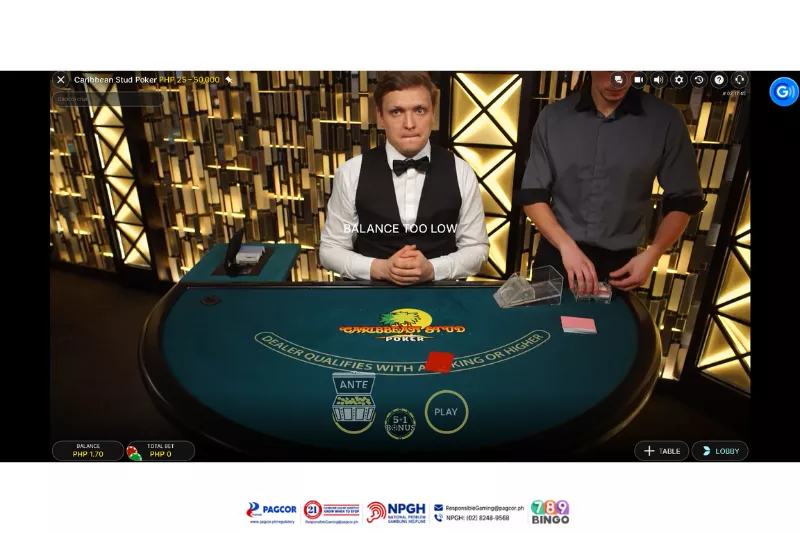
Caribbean Stud Poker by Evolution stands apart from purely automatic table games through its Play/Fold decision, conditional dealer qualification and three distinct wagering options. Evolution‘s five-card format gives players full visibility of their own hand before they decide whether to commit the additional 2x Play wager.
The most significant rule is dealer qualification. Even when a player holds a premium poker hand, the main Play multiplier does not apply unless the dealer qualifies and the player wins the hand comparison. This makes the relationship between hand strength and actual settlement more complicated than the payout table alone suggests.
The 5+1 Bonus and Progressive Jackpot introduce separate opportunities for qualifying payouts, including after a player folds or loses the main game. Their respective theoretical RTP figures of 91.44% and 81.84%, however, are lower than the main game’s optimal 98.19% total-wager figure.
From an editorial perspective, the game’s appeal lies in its combination of recognizable poker rankings and a meaningful continuation decision. Its main limitations are the three-times-Ante exposure when continuing, the possibility of losing both main wagers and the additional costs associated with lower-RTP side bets.
Before playing, check the active 789Bingo table for current betting limits, side-bet availability, payout schedules and the displayed progressive amount. No strategy, hand history or wager size can eliminate the house advantage or guarantee a winning outcome.
789Bingo promotes Responsible Gaming for players aged 21+ only. Gambling can be addictive; know when to stop. For help, contact NPGH: (02) 8248-9568 or [email protected]











Leave a Reply