

Auto Roulette by Evolution removes the live dealer but keeps a real physical roulette wheel at the center of every round. As a casino game online, it uses a fully automated precision wheel that launches and settles the ball without a croupier, allowing the table to run continuously at around 60 to 80 games per hour while preserving standard single-zero European roulette rules.
The result is faster and more mechanical than a traditional dealer-led roulette table, yet the objective does not change. You place chips on numbers or groups of numbers before betting closes, then the automated wheel determines the winning pocket and settles every covered wager according to the standard roulette paytable.
What Defines Evolution Auto Roulette?
Quick Stats: Fully automated physical wheel | 37-number single-zero layout | Optimal theoretical RTP of 97.30%
Evolution’s standard Auto Roulette belongs to the provider’s live roulette portfolio but does not use a live dealer to spin the wheel. Instead, an automated wheel engine handles the physical ball and wheel, while cameras stream the real result to the interface and the software manages betting, settlement, statistics and the next-round countdown.
The European rule set contains 37 pockets: numbers 1 through 36 plus a single green zero. Numbers 1 to 36 alternate between red and black according to the established roulette wheel sequence, while zero sits outside Red/Black, Odd/Even, High/Low, Dozen and Column bets.
Evolution also offers French and American Auto Roulette configurations elsewhere in its portfolio, but its standard Auto Roulette is covered by the provider’s European single-zero rules. That distinction matters because adding a second zero, or applying French rules such as La Partage, changes the underlying mathematics and should not be copied onto this page.
Single-Zero Wheel, Payouts and 97.30% RTP
Specification | Details |
Software Provider | Evolution |
Game Type | Automated live roulette |
Wheel | Physical automated precision wheel |
Numbers | 0 to 36 |
Total Pockets | 37 |
Optimal Theoretical RTP | 97.30% |
Highest Standard Single-Bet Payout | 35:1 on Straight Up |
Roulette Rules | Evolution’s published roulette rules explicitly apply to Auto Roulette and use the same inside and outside bet structure as its European tables |
Inside Bets | Straight Up 35:1, Split 17:1, Street 11:1, Corner 8:1, Line 5:1 |
Outside Bets | Column 2:1, Dozen 2:1, Red/Black 1:1, Even/Odd 1:1, 1–18/19–36 1:1 |
The published optimal theoretical return is 97.30%, which corresponds to a house edge of approximately 2.70%. The same theoretical return applies across the standard European roulette wagers because the 35:1, 17:1, 11:1, 8:1, 5:1, 2:1 and 1:1 payouts are calibrated against a 37-pocket wheel containing one zero.
That 97.30% figure is a long-run mathematical percentage rather than a promise that an individual session will return exactly that amount. A player can finish far above or below theoretical RTP over a short period because each physical spin produces one independent result from the wheel.
Why the Automated Wheel Changes the Pace, Not the Odds
The main difference between Auto Roulette and conventional live roulette appears in how the spin is produced. There is no dealer physically launching the ball, announcing each bet and manually preparing the next round, so Evolution says the automated system can complete approximately 60 to 80 games per hour and operate continuously.
That faster rhythm can materially change session turnover even though the probability of the wheel itself remains the same. A casino game online that produces more rounds per hour can expose the same bankroll to more wagering opportunities within a fixed amount of time, so pace should be treated as a bankroll factor rather than as a mathematical advantage.
Suppose one player wagers ₱100 per round for 30 rounds, while another places the same ₱100 on 70 Auto Roulette rounds. The first player has ₱3,000 in total turnover, while the second reaches ₱7,000, even though both used the same visible chip value.
The automated wheel therefore does not improve or reduce the 97.30% theoretical return simply by moving faster. It changes how quickly repeated exposure to the underlying 2.70% house edge can accumulate during a session.
Straight Up Pays 35:1 Because Only One Pocket Wins
A Straight Up wager covers one individual number, including zero. Evolution pays a successful Straight Up bet at 35:1, meaning a ₱100 winning wager produces ₱3,500 in winnings plus the return of the original ₱100 stake.
There are 37 possible pockets on the standard wheel, so one chosen number occupies exactly one of those 37 results. If all pockets are treated as equally likely over the long run, the probability of one specific number is approximately 1 ÷ 37 = 2.70%.
The payout illustrates the house edge directly. A fair gross return for a one-in-37 event would need to return 37 units including the original stake, but roulette returns 36 units, consisting of 35 units of winnings plus the stake.
That ratio is:
36 ÷ 37 = 97.297%
which rounds to:
97.30% RTP
The missing one unit out of every theoretical 37 units represents the mathematical margin created by the zero pocket.
Auto Roulette as a Casino Game Online: Inside and Outside Bets
The betting layout separates wagers into two broad groups. Inside bets focus on one number or a small cluster of nearby numbers, while outside bets cover larger sections of the layout and therefore pay smaller amounts when successful.
A Straight Up covers one number, a Split covers two adjacent numbers, a Street covers three numbers in one row, a Corner covers four touching numbers, and a Line covers six numbers across two neighbouring rows. Their respective payouts fall from 35:1 to 5:1 as the number of covered outcomes increases.
Outside bets spread the wager across much larger groups. Columns and Dozens each cover 12 numbers and pay 2:1, while Red/Black, Odd/Even and 1–18/19–36 each cover 18 of the 37 pockets and pay 1:1.
The green zero is what prevents those 18-number wagers from becoming true 50/50 propositions. There are 18 winning numbered pockets and 18 losing numbered pockets for Red/Black, for example, but zero creates a 37th outcome that loses both the Red and Black outside bets under the standard rules.
Why Even-Money Bets Still Have a House Edge
Red/Black may look like a coin flip because the wheel contains 18 red numbers and 18 black numbers. The same visual symmetry applies to Odd/Even and Low/High, but the single zero prevents each wager from covering half of all available outcomes.
For a ₱100 Red wager, 18 pockets return ₱200 including the original stake, while the remaining 19 pockets return nothing. The long-run gross-return calculation is therefore approximately:
18 ÷ 37 × 2 = 97.30%
That produces the same theoretical return as the Straight Up calculation.
Changing from a 35:1 number wager to a 1:1 color wager changes the frequency and size of possible wins. It does not remove the 2.70% underlying house edge of the standard single-zero table.
This is important when choosing a casino game online wager based on session preference. Outside bets can settle successfully more often than a single-number wager, but those more frequent outcomes come with smaller payouts rather than a higher standard roulette RTP.
Split, Street, Corner and Line Bets Explained
A Split covers two adjacent numbers on the betting layout and pays 17:1. A ₱100 winning Split therefore produces ₱1,700 in winnings plus the original ₱100 stake, but either of the two covered numbers must become the final wheel result.
A Street covers three numbers from one horizontal row and pays 11:1, while a Corner covers four adjoining numbers and pays 8:1. A Line reaches across two neighbouring rows for six covered numbers and pays 5:1.
These bets create different balances between hit frequency and payout size without changing the underlying single-zero mathematics. More covered numbers increase the chance that the ball lands within the selected group, but the corresponding payout falls to compensate.
Someone who prefers fewer covered outcomes can therefore use Straight Up or Split bets, while broader inside coverage is available through Streets, Corners and Lines. None of those structures predicts where the automated physical ball will stop.
Dozens and Columns Cover 12 Numbers Each
The three Dozen sections divide numbers 1 through 36 into:
1st 12: 1–12, 2nd 12: 13–24, and 3rd 12: 25–36. A successful Dozen wager pays 2:1, while zero falls outside all three sections.
Columns also divide numbers 1 through 36 into three groups of 12, but their distribution follows the vertical columns printed on the betting grid. Each successful Column wager pays 2:1, and once again zero is not included.
Because each bet covers 12 of the 37 pockets, the probability of a selected Dozen or Column winning on one spin is approximately 32.43%. The payout remains lower than an inside wager because the selected group covers a much larger part of the wheel.
These bets should not be treated as safer in the sense of guaranteeing positive results. They simply trade a broader group of winning pockets for a smaller payout per successful spin.
Neighbour Bets Follow the Wheel, Not the Number Grid
Evolution’s roulette interface also supports neighbour-style wagers through the racetrack display. Instead of grouping numbers by where they appear on the rectangular betting grid, these wagers use the actual sequence of pockets around the physical roulette wheel.
Published rules include traditional sections such as Tiers du Cylindre, Orphelins à Cheval and Voisins du Zero. Each one automatically places several chips across a specified group of Straight Up, Split, Street or Corner positions rather than creating a completely new payout category.
This matters for bankroll tracking because one racetrack selection can place multiple underlying chips at once. The displayed unit may look like one selection, but the total wager can be several times larger depending on how many component bets the chosen section requires.
For someone comparing this casino game online with a simpler single-bet interface, the racetrack is best understood as a shortcut for placing established roulette combinations. It does not create a special probability system or change the 37-pocket wheel.
Voisins du Zero Covers the Zero Side of the Wheel
Voisins du Zero is built around the wheel sector containing zero and the surrounding sequence. Evolution’s published rules state that it covers 17 numbers through a combination of nine chips placed across several Street, Split and Corner bets.
The wager is therefore not one uniform 17-number ticket paying one fixed amount. Each individual chip sits on its own standard roulette position, so the payout depends on which covered number wins and which component bets include that number.
Tiers du Cylindre uses six chips to cover 12 numbers on the section of the wheel opposite zero, while Orphelins covers numbers outside the Voisins and Tiers sectors through several underlying bets.
These traditional racetrack bets can make complex wheel coverage faster to enter, particularly on an automated table where the betting cycle moves quickly. They still use the normal roulette paytable underneath.
Winning Numbers and Statistics Do Not Predict the Next Spin
Evolution’s interface can display recent winning numbers and broader roulette statistics. The provider also offers statistics tools across its live roulette portfolio, allowing players to review previous outcomes and historical distributions.
Those records are descriptive rather than predictive. A number that has appeared several times recently does not become more likely because it is “hot,” and a number missing from many recent spins does not become mathematically due on the next physical spin.
Suppose zero has not appeared in 50 recorded rounds. The next result still comes from the same physical 37-pocket layout, so the absence of zero from previous results does not remove it from the wheel or create an obligation for it to appear.
The same principle applies to Red/Black streaks, consecutive Odd results and repeated Dozens. Previous outcomes can be interesting to review, but they should not be turned into a guaranteed staking system.
Rebet and Saved Bets Change Convenience, Not Probability
Evolution’s roulette interfaces include tools designed to reduce the amount of manual input required from round to round. Features such as Rebet and saved favourite wagers can reproduce previously selected positions without changing their mathematical properties.
Rebet is particularly relevant in a faster casino game online because it makes it possible to repeat the same layout quickly as the next betting period begins. Convenience can also increase turnover, however, because less time is required to manually rebuild a multi-chip selection.
If a player repeatedly places ₱500 in total bets for 20 rounds, turnover reaches ₱10,000. Repeating the same ₱500 arrangement for 60 rounds raises that session turnover to ₱30,000 even though the size and probability of each individual wager stayed unchanged.
Saved bets and automation should therefore be viewed as interface tools. They do not identify favourable spins or alter the 97.30% theoretical return.
Auto Roulette vs Speed Auto Roulette
Evolution treats Auto Roulette and Speed Auto Roulette as separate products. Standard Auto Roulette uses the automated wheel to deliver approximately 60 to 80 games per hour, while Evolution describes Speed Auto Roulette as a substantially faster variant capable of around 2,500 games per day.
Speed Auto Roulette also changes when wagering occurs, with Evolution stating that betting happens during the spin. That faster design should not be copied onto a standard Auto Roulette page simply because both products use automated physical wheels.
The distinction matters for both players and SEO.
Auto Roulette should focus on automated single-wheel roulette with no dealer.
Speed Auto Roulette should focus on the accelerated betting cycle and faster round frequency.
Using nearly identical articles for the two URLs would obscure the practical reason both products exist.
Auto Roulette vs Instant Roulette
Instant Roulette also uses automated wheels, but its architecture is fundamentally different. Evolution runs 12 synchronized Auto Roulette wheels that spin sequentially, allowing the player to take unlimited betting time and then press Play Now to join whichever wheel is closest to its next result.
Standard Auto Roulette instead follows one continuing table cycle. The player waits for the betting period, places wagers, betting closes, the automated wheel resolves, and then the next round begins.
Instant Roulette is therefore designed around player-controlled timing and multiple simultaneous wheels. Auto Roulette is designed around dealer-free automation of the traditional recurring roulette table.
This difference should remain clear whenever both games appear in the same 789Bingo library. Sharing the same 37-pocket mathematics does not make them the same product.
Why Auto Roulette Is Still a Live Game
The absence of a live dealer can make Auto Roulette look closer to an RNG roulette product, but Evolution classifies it within its live roulette portfolio. A physical precision wheel and ball produce the result, and the wheel action is streamed through the game interface rather than generated solely as a simulated on-screen RNG spin.
That makes the title a useful middle point between traditional dealer-led tables and fully digital roulette. The physical outcome remains visible, while the repetitive tasks usually handled by a croupier are automated.
For a casino game online, this structure is the central feature rather than an added bonus mechanic. There are no Lightning multipliers, special number enhancements or feature rounds in the standard Auto Roulette rule set reviewed here.
Keeping that distinction clear also prevents contamination from Lightning Roulette, Gold Vault Roulette or other Evolution products that combine standard roulette with extra multiplier systems.
Starting an Auto Roulette Round
Open Auto Roulette through 789Bingo‘s live casino section and wait until the betting interface opens for the next spin. Select a chip value, then place one or more wagers on the number grid, outside-bet areas or available racetrack options before betting closes.
The Total Bet display should be checked before each round, especially when using combination wagers or several individual positions. Once betting ends, the automated wheel spins the physical ball and no additional wager can be added to that completed round.
When the ball settles, the interface identifies the winning pocket and calculates every active wager automatically. A covered position pays according to its bet type, while all positions that do not cover the result lose their corresponding stake.
The next countdown then begins and the process repeats. Because Auto Roulette can move through more rounds than many dealer-operated tables, setting the intended number of spins in advance can be as important as setting the chip value.
Pro Tip: Track total turnover rather than only the size of one chip. A ₱100 wager may look small, but repeating it across 70 automated rounds creates ₱7,000 in total wagering, and combination bets can increase that figure further.
Managing a Faster Casino Game Online Session
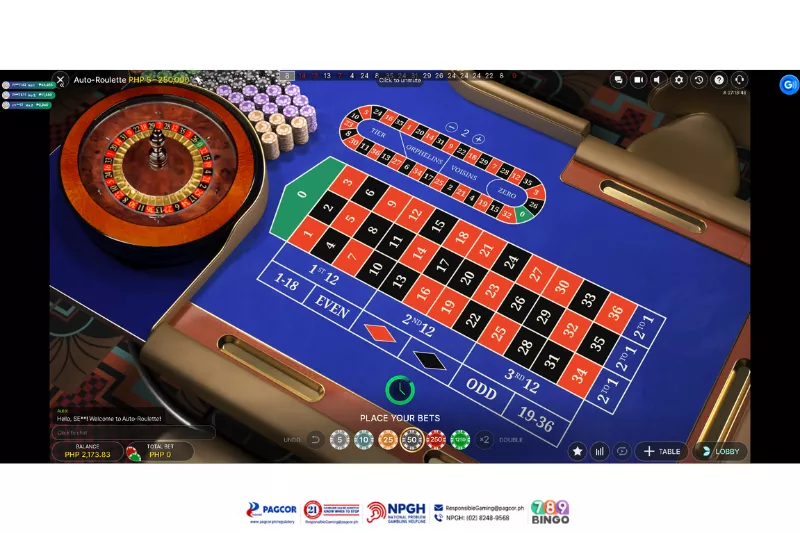
Auto Roulette combines simple rules with a faster automated cycle, so bankroll management should account for both wager size and round frequency. A session budget that feels reasonable at a slower dealer table can be consumed more quickly when the wheel completes 60 to 80 games per hour.
Set a maximum amount for the entire session before the first spin and consider a separate per-round ceiling. If several inside, outside or racetrack bets are active at the same time, count all of them toward that per-round amount rather than focusing on the largest individual chip.
Avoid increasing stakes because the previous spin almost hit your chosen number or because a color has lost repeatedly. The ball does not know whether a wager narrowly missed, and previous outcomes do not require the next result to compensate for earlier losses.
Using Rebet can make repeated wagering easier, but convenience should not replace deliberate decisions. Deposit limits, session limits, timeouts and self-exclusion tools can help maintain control when the faster pace begins to exceed the intended budget.
Use money reserved for entertainment rather than funds needed for bills, savings or debt payments. Gambling can be addictive; know when to stop.
Common Questions About Auto Roulette
What is the RTP of Evolution Auto Roulette?
Evolution’s published standard Roulette rules, which explicitly include Auto Roulette, state an optimal theoretical RTP of 97.30%. The figure corresponds to the provider’s European single-zero wheel with 37 pockets and its standard payout schedule.
That theoretical return is equivalent to a house edge of approximately 2.70%. It describes long-run mathematics and does not mean a player receives 97.30% of every individual session’s wagers back.
Does Auto Roulette use a real wheel or RNG?
Evolution describes Auto Roulette as using a fully automated precision Roulette wheel rather than a live dealer. The ball and wheel are physical parts of the live setup, while automated equipment performs the spin and the interface handles wagering and settlement.
This distinguishes it from an ordinary digital RNG roulette game. It also distinguishes it from dealer-led Live Roulette, where a human croupier physically initiates the wheel and ball.
What is the highest standard Auto Roulette payout?
The highest standard single-bet payout in the European Auto Roulette paytable is 35:1 for a Straight Up wager on one number. Split pays 17:1, Street 11:1, Corner 8:1, Line 5:1, Columns and Dozens 2:1, and even-money outside bets pay 1:1.
The 35:1 figure should not be described as a guaranteed maximum cash win because the actual peso amount depends on the stake and the active 789Bingo table limits. Check those PHP minimum and maximum values directly in the current game interface before betting.
Where Auto Roulette Fits at 789Bingo
Auto Roulette is best understood as standard European roulette with the dealer function replaced by a precision automated wheel. Its defining sequence remains straightforward: choose the wager, wait for betting to close, watch the real ball settle into one of 37 pockets, then receive the standard payout if that result is covered.
The automated system changes speed and presentation rather than introducing new multipliers or bonus rounds. Players who prefer a physical roulette result without waiting for dealer handling can compare Auto Roulette with other wheel and table formats in the live casino collection.
For a casino game online, the most important distinction is therefore not a new paytable but the delivery method. Auto Roulette keeps the familiar 97.30% single-zero mathematics while using automated hardware to produce more rounds with less interruption than a conventional dealer-led table.
The same speed that makes the format convenient can also increase total session turnover, so the number of rounds matters alongside chip size. Understanding that relationship between pace, coverage and the single-zero house edge gives a clearer picture of Auto Roulette than relying on recent-number patterns or roulette systems.














Leave a Reply