

Play Bac Bo by Evolution at 789Bingo. Learn its four-dice rules, 98.87% Player/Banker RTP, 10% Tie deduction and Tie payouts up to 88:1.
Bac Bo is an Evolution casino game online that borrows the Player, Banker and Tie choices familiar from baccarat but replaces the cards with four dice. Two dice belong to Player, two belong to Banker, and whichever pair produces the higher combined total wins.
This simplicity hides one important mathematical difference from baccarat. Player and Banker are completely symmetrical, both pay 1:1, and neither uses commission. Instead, Bac Bo creates its house edge by returning only 90% of a Player or Banker wager when the round finishes in a Tie.
Bac Bo at a Glance: Four Dice and Three Bets
Quick Stats: Four six-sided dice | Player/Banker RTP: 98.87% | Tie payout: 4:1–88:1
The Evolution casino game provider launched Bac Bo in January 2022 as a live dice game inspired by baccarat. Each round uses four dice in four individual automatic shakers, with two assigned to Player and two assigned to Banker. The two dice on each side are added together, producing a total from 2 to 12. The higher total wins. Equal totals create a Tie.
Only three basic betting positions define the original live game:
Player
Banker
Tie
There are no baccarat-style third-card rules to memorize. A hand cannot draw another die after its original pair has settled, and Player does not receive different rules from Banker.
That symmetry is one of the defining characteristics of Bac Bo rules.
Dice, Payouts and Bac Bo RTP
Specification | Bac Bo Details |
Software Provider | Evolution |
Game Type | Live dealer dice / dice-baccarat |
Dice | Four standard six-sided dice |
Player Dice | Two |
Banker Dice | Two |
Main Bets | Player, Banker, Tie |
Player Payout | 1:1 |
Banker Payout | 1:1 |
Player RTP | 98.87% |
Banker RTP | 98.87% |
Tie RTP | 95.52% |
Highest Tie Payout | 88:1 |
Volatility | Not stated as one universal provider value |
Bet Range | Verify in the active 789Bingo table |
Evolution’s published Bac Bo rules give an optimal theoretical RTP of 98.87% for Bac Bo, while regulatory copies of the rules separate the returns into 98.87% for Player/Banker and 95.52% for Tie.
This means the page should not simply state:
RTP: 98.87%
without identifying the wager.
A Tie bet operates under different probabilities and payouts from Player or Banker.
The 10% Tie Rule Creates the Player and Banker Edge
Player and Banker look like even-money wagers.
A winning ₱100 Player bet produces ₱100 in winnings plus the original ₱100 stake. Banker works the same way.
Unlike ordinary commission baccarat, Bac Bo does not reduce a winning Banker payout through a 5% commission.
The house advantage appears somewhere else.
When Player and Banker produce the same two-dice total, 90% of an existing Player or Banker wager is returned. The remaining 10% is lost.
Example:
Player wager: ₱100
If Player wins: ₱100 profit
If Banker wins: ₱100 loss
If the result is a Tie: ₱90 returned, ₱10 lost
That rule may look minor, but it explains almost the entire mathematical structure of the main bets.
There are 1,296 equally possible four-dice outcomes because each pair of dice has 36 possible results:
36 Player combinations × 36 Banker combinations = 1,296
Of those:
575 result in Player winning
575 result in Banker winning
146 result in a Tie
Player and Banker therefore each win approximately 44.37% of rounds, while ties occur about 11.27% of the time. These values also appear in current mathematical analyses of Evolution’s published rules.
Because Player and Banker have identical probabilities, there is no structural Banker advantage comparable to card baccarat.
The house edge instead comes from:
11.27% probability of a Tie × 10% of the side wager lost
which produces an edge of approximately:
1.13%
and therefore:
98.87% theoretical RTP
That is a stronger explanation than merely publishing the RTP figure.
Player and Banker Are Mathematically Identical
This is perhaps the biggest conceptual difference between Bac Bo and traditional baccarat.
In baccarat, Player and Banker use different drawing rules. Those rules create a slight mathematical advantage for Banker, which is why conventional Banker wins often carry a commission.
Bac Bo has no equivalent asymmetry.
Player receives two ordinary six-sided dice.
Banker receives two ordinary six-sided dice.
Each side can total anywhere from 2 through 12.
Neither side receives a special third die, different scoring method or separate probability distribution.
As a result:
Player RTP = 98.87%
Banker RTP = 98.87%
A long streak of Banker results therefore does not mean Banker has become the mathematically superior choice. Likewise, several Player wins do not alter the probability structure of the next round.
The labels identify the two sides of the table. They do not give one side an inherent advantage.
The Dice Stop in Stages
Bac Bo does not reveal all four dice at exactly the same moment.
Evolution places each die in its own automatic shaker and stages the reveal. The first Player die settles first, followed by the first Banker die. The side showing the higher first die then normally reveals its second die before the remaining side. If the first dice are equal, Player’s second die is revealed first.
This sequence creates the possibility of what Evolution describes as a come-from-behind result.
For example:
Player’s first die: 6
Banker’s first die: 3
Player initially appears ahead.
Then, the Player’s second die would probably stop on:
1
giving the Player a total equal to:
7
Banker’s remaining die could then turn out to be:
5
This gives Banker:
8
Banker wins despite having initially shown the lower first die.
The reveal sequence affects how the result unfolds visually.
It does not change the mathematics of the four dice.
The first die should therefore not be treated as a signal for placing another wager or predicting the unseen die. Betting has already closed before the final outcome is known.
Tie Bets Use a Payout Ladder
Tie is not one fixed-payout wager.
Evolution changes the payout according to the total shared by Player and Banker.
The published structure is:
Tied Total | Tie Payout |
2 or 12 | 88:1 |
3 or 11 | 25:1 |
4 or 10 | 10:1 |
5 or 9 | 6:1 |
6, 7 or 8 | 4:1 |
The payout rises as the tied total becomes less likely.
A tie on 7, for example, can occur through many different two-dice combinations on both sides.
A tie on 2 can happen only when:
Player = 1 + 1
and
Banker = 1 + 1
Likewise, 12 requires:
6 + 6 against 6 + 6
That difference in frequency explains why an equal total of 2 or 12 receives the largest published payout.
Why 2 or 12 Can Pay 88:1
The four-dice structure allows the extreme Tie probability to be calculated directly.
There are:
1,296 possible combined outcomes
Only one produces:
Player 2 / Banker 2
and only one produces:
Player 12 / Banker 12
So there are just:
2 extreme-Tie outcomes out of 1,296
or approximately:
0.154% of all rounds
That’s roughly 1 in 648 rounds mathematically, before considering natural variation in actual sessions.
The 88:1 payout should therefore not be confused with the probability of receiving the result.
An 88:1 prize sounds much larger than a 1:1 Player win because the qualifying event is dramatically less frequent.
The same principle applies down the Tie ladder.
Totals around the middle—especially 6, 7 and 8—can be constructed from many more dice combinations, so their Tie payout falls to 4:1.
Why the Tie RTP Is Lower Despite the 88:1 Payout
A larger headline payout does not automatically create a higher theoretical return.
The Tie wager has a published RTP of approximately 95.52%, below the 98.87% Player/Banker return.
Its house edge is therefore approximately:
100% − 95.52% = 4.48%
Player and Banker carry:
100% − 98.87% = 1.13%
The rare 88:1 possibility is therefore balanced by losing the entire Tie stake whenever Player and Banker finish with different totals.
Out of 1,296 mathematical outcomes:
146 are ties
1,150 are not
Most Tie bets therefore lose, even though the successful ones can pay more than the main wagers.
This makes Bac Bo a useful example of why:
maximum payout ≠ highest RTP
The largest available payout and the strongest theoretical return belong to different betting positions.
Bac Bo Is Simpler Than Card Baccarat
The Evolution casino live games developer describes Bac Bo as a dice game created in the spirit of baccarat, but the two games should not be treated as mechanically identical.
Traditional baccarat requires:
- card-value rules;
- two or sometimes three cards per hand;
- fixed third-card drawing rules;
- modulo-10 scoring;
- different Player and Banker probabilities;
- often a commission or altered Banker payout.
Bac Bo removes most of that structure.
Each side receives exactly:
two dice
The dice values are simply added.
There is no need to discard the tens digit because a two-dice total cannot exceed 12.
There is no third-die rule.
There is no Banker commission in the standard game.
The only comparison is:
Which two-dice total is higher?
That simplicity is why describing Bac Bo merely as another baccarat table undersells what it actually does.
It takes the familiar Player-versus-Banker presentation but rebuilds the underlying game using symmetrical dice probabilities.
Why 12 Does Not Become 2
Another important distinction from baccarat concerns totals above nine.
In baccarat:
7 + 5 = 12
is scored as:
2
because only the final digit counts.
Bac Bo does not use that system.
If two Bac Bo dice show:
6 + 6
the result is:
12
It remains 12.
That is why the Tie payout table includes totals all the way from:
2 through 12
and why a 12–12 Tie can qualify for the same 88:1 payout as 2–2.
This also means the maximum ordinary score is not nine.
It is twelve.
Only the Final Two-Dice Total Determines the Winner
The staged reveal can create visual tension, but neither first die has independent settlement value.
Suppose:
Player first die = 5
Banker first die = 2
Player appears to lead by three.
That does not mean Player has won anything.
If the second dice become:
Player = 1
Banker = 6
the final totals are:
Player = 6
Banker = 8
and Banker wins.
The important number is therefore never the first-die difference.
It is the combined total after both dice on each side have settled.
This is useful to state explicitly because Evolution intentionally reveals the dice sequentially, and the changing scoreboard can make an unfinished result feel more meaningful than it mathematically is.
Reading Bac Bo Statistics Without Predicting the Next Roll
Evolution provides live game statistics and previous-result information for Bac Bo.
These tools can show how often Player, Banker and Tie have recently occurred.
They are historical displays.
They do not change the probability of the four dice on the next completed round.
For example:
Banker – Banker – Banker – Banker
does not establish that Player must win next.
Similarly:
Player – Banker – Player – Banker
does not guarantee another Player result simply because the recent results have alternated.
The four-dice structure remains symmetrical. This is regardless of the previous sequence.
A streak may continue, end or change direction without violating the mathematics of the game.
Starting a Bac Bo Round at 789Bingo
To access Bac Bo on 789Bingo, sign in, open the live casino section and locate the Evolution game.
Check the active table before wagering because PHP minimum and maximum betting limits can vary by operator configuration.
1. Choose Player, Banker or Tie
Player and Banker both pay 1:1 when they finish with the higher total.
Tie uses the variable payout ladder.
2. Select the wager amount
Remember that Player and Banker are mathematically identical.
Choosing one based on previous streaks does not change its theoretical RTP.
3. Wait for betting to close
All four dice begin moving in their separate automatic shakers.
Wagers must be completed (before the betting period ends).
4. Watch the staged reveal
The dice stop one by one.
Do not evaluate the winner from the first die alone.
5. Add each side's two dice
The higher total wins.
Both matching totals result in a Tie.
6. Check the Tie rule
A direct Tie wager receives the appropriate payout (according to the tied total).
Existing Player and Banker wagers receive 90% of their stake back. This means 10% is lost.
Game reminder:
Player and Banker have the same theoretical RTP under the published rules, so recent streaks do not make either side mathematically more likely to win the next round. The Tie wager has a different payout structure and lower theoretical RTP.
Bac Bo vs First Person Bac Bo
The Evolution casino gaming provider also offers First Person Bac Bo, but it is a separate product.
The standard Bac Bo page covers the live game.
First Person Bac Bo uses:
- RNG-generated results;
- a 3D game environment;
- the same basic four-dice structure;
- Normal or Fast playback speeds;
- a GO LIVE option for moving to the live version.
These pages should not be confused as identical simply because the underlying Player/Banker/Tie concept is similar.
Standard Bac Bo is the live-dealer version, while First Person Bac Bo uses an RNG-driven 3D format.
Bac Bo vs Lightning Bac Bo
Evolution also added Lightning Bac Bo as a separate product in its 2025 release programme. Evolution’s 2026 annual reporting specifically identifies Lightning Bac Bo as part of its regional live-game development.
Let us not confuse the Lightning mechanics with the original Bac Bo rules.
Likewise, let us not go far from the standard game’s published 88:1 Tie structure simply because another Bac Bo-branded title exists.
The correct product featured in this review remains:
Evolution Bac Bo — original live four-dice game
This is particularly important because Bac Bo, First Person Bac Bo and Lightning Bac Bo are separate searchable titles online.
Managing a Session on Bac Bo by Evolution
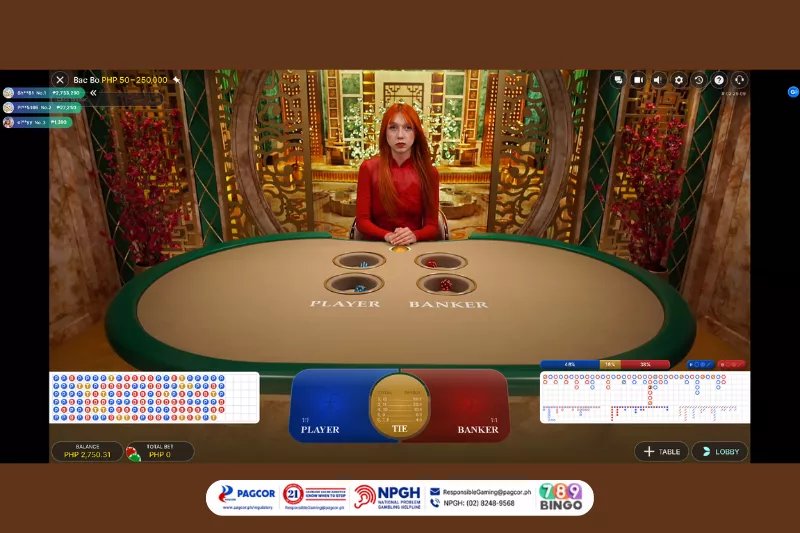
Bac Bo has fewer betting positions than baccarat or Sic Bo, but its simple rules do not remove the house edge.
Choose a session budget before starting.
Use disposable entertainment funds rather than money intended for bills, food, debt payments or savings.
Do not raise a wager solely because Player or Banker has lost several rounds in succession. Previous dice results do not force the next four-dice combination to compensate for earlier outcomes.
The higher Tie payouts can also make small wagers look disproportionately attractive, but the Tie position carries a lower theoretical return than either main side.
Set deposit and session limits when useful, and use timeout or self-exclusion controls if play stops feeling controlled.
Gambling can be addictive, know when to stop.
Frequently Asked Questions
What is the RTP of Bac Bo?
Player and Banker have a theoretical RTP of 98.87%.
The Tie wager has a lower theoretical return of approximately 95.52%. Published rules therefore support bet-specific RTP values rather than one universal percentage for all three positions.
What happens to Player or Banker when Bac Bo ties?
The wager does not receive a full push.
Published rules state that 90% of the Player or Banker stake is returned, meaning the remaining 10% is lost.
This rule is what creates the approximately 1.13% house edge on the otherwise symmetrical even-money Player and Banker bets.
Why can the Tie bet pay 88:1?
The payout depends on the tied total.
A Tie on 2 or 12 pays 88:1 because those extreme totals have far fewer possible dice combinations than central totals such as 6, 7 or 8.
Published Evolution Bac Bo rules list:
- 2/12 = 88:1
- 3/11 = 25:1
- 4/10 = 10:1
- 5/9 = 6:1
- 6/7/8 = 4:1
Understanding Bac Bo on 789Bingo
The strongest identity of Bac Bo by Evolution is not simply “baccarat using dice.”
Its complete structure is:
two Player dice + two Banker dice → compare the totals → highest total wins → equal totals activate the Tie rules
From there, one small rule creates most of the game’s mathematics:
Player and Banker lose 10% of their stake when the totals tie.
That explains why two perfectly symmetrical 1:1 wagers still return 98.87% theoretically.
Players who like Bac Bo’s straightforward dice comparison can explore Sic Bo, Craps, baccarat, Dragon Tiger and other dealer-led games through the 789Bingo live casino collection.
The central lesson is simple: Player and Banker have the same odds in Bac Bo. The meaningful mathematical choice is not which side has been winning recently, but which type of wager you choose—main side or Tie.
789Bingo is committed to Responsible Gaming. Underage gambling is prohibited; gaming is strictly for eligible persons aged 21 and above. If you or someone you know has a gambling problem, contact the 24/7 National Problem Gambling Helpline at (02) 8248-9568 or PAGCOR at [email protected] . Gambling can be addictive; know when to stop.












Leave a Reply