
A Philippine Offshore Gaming Operator, or POGO, conducts offshore gaming operations in the Philippines for players abroad. Philippine law now bans these operations. Knowing the difference between POGOs and domestic gaming helps you check a casino website more carefully.
If someone sends you an “iskater” link, a casino promotion, or a screenshot of a large win, start with the website itself. Who operates it? Does the exact address match an official record, and can you understand the conditions before sharing your information or money?
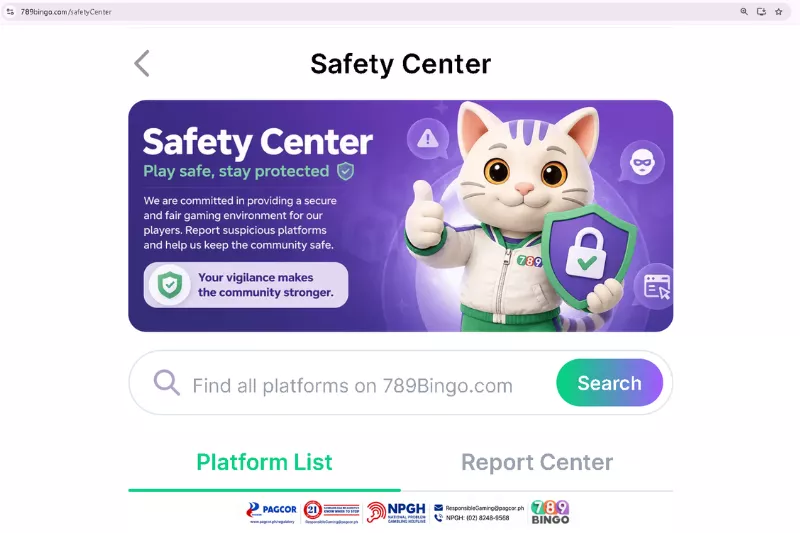
The 789Bingo Safety Center offers a starting point for researching gaming-related websites. Use its entries alongside PAGCOR’s current records, then look closely at the operator, the domain, and the terms that apply to your account.
What Is a Philippine Offshore Gaming Operator?
POGO stands for Philippine Offshore Gaming Operator. Republic Act No. 12312 connects the term to offshore gaming conducted in the Philippines for offshore players, including operations carried out through service providers.
That distinction matters. A gambling website does not automatically become a POGO because Filipinos can open it, because someone shares its link through Telegram, or because its server sits overseas.
Three categories often get mixed together:
- POGOs and Internet Gaming Licensees: Offshore gaming categories covered by the government’s ban.
- Authorized domestic online gaming platforms: Platforms operating within the relevant Philippine gaming framework for the local market.
- Unauthorized gambling websites: Sites offering gambling without the permission required for their activities. Their exact legal classification depends on the facts.
PAGCOR continues to describe a separate regulatory framework for local electronic gaming and associated online platforms. The offshore ban does not turn every online casino into a POGO, and an overseas license alone does not establish authorization to serve Philippine players. Check the relevant Philippine records.
History of POGO in the Philippines
PAGCOR established its POGO regulatory framework in 2016, during Rodrigo Duterte’s administration. That framework required licensing and imposed conditions on offshore gaming operations, so describing every former POGO as “always unregulated” would be inaccurate.
The important question today is what happened to that authorization. A company’s historical license cannot establish that it may still operate after the government cancels the relevant permission.
From regulation to the POGO ban
The timeline explains why older news reports and licensing documents can confuse readers. They describe an earlier regulatory position, while the current PAGCOR notice warns against claims of a valid offshore gaming or internet gaming license under that discontinued framework.
Why did the Philippines ban POGOs?
The government cited public safety, financial crime, exploitation, and national security concerns. Executive Order No. 74 refers to the Department of Finance’s assessment that the sector’s risks outweighed its benefits, alongside concerns about money laundering, fraud, and damage to investment and tourism.
Those reasons extend beyond disputes over casino bonuses. They concern the wider effects of offshore operations on workers, communities, public institutions, and the financial system.
Reports of abuse deserve attention, but the facts of each case still matter. An arrest is not a conviction, and an allegation still requires investigation and proof.
Is POGO Legal or Illegal in the Philippines in 2026?
Philippine law bans POGO operations. The Anti-POGO Act permanently revokes the relevant offshore licenses and licensing authority, so an old permit cannot authorize a return to those operations.
Authorized domestic online gaming falls under a separate framework. For a player checking an online casino, the useful questions concern the operator’s current authorization, the registered brand, and the exact website address.
Website access does not settle those questions. Opening a page, receiving a referral link, or finding an alternative address does not establish that the operator has permission to accept your participation.
The same caution applies to foreign-hosted sites. Their location alone does not answer whether they hold the authorization required for the Philippine market, and it does not automatically place them within the statutory definition of a POGO.
List of POGOs in the Philippines: Which Records Matter?
A search for a “list of POGO Philippines” can lead to several different kinds of records. Some identify former licensees, others identify canceled permissions, and current domestic gaming directories serve a different purpose.
PAGCOR’s offshore gaming page links to lists of canceled POGO licensees and service providers. Treat those as records of former or canceled authorization, rather than a directory of offshore operators that players may still use.
For a practical check, distinguish these resources:
Resource | What it helps you establish |
PAGCOR offshore gaming notices and cancellation lists | The status of former offshore licensees and the discontinued licensing framework. |
PAGCOR Guarantee and current domestic gaming registries | The connection between currently listed gaming businesses, brands, and authorized website addresses. |
789Bingo Safety Center | Information and licensing-status labels displayed in 789Bingo’s directory of gaming-related websites. |
The Safety Center includes entries labelled “PAGCOR Licensed” and “Non-PAGCOR Licensed.” It therefore should not be described as a complete list of POGOs or a list containing only illegal operators. Its labels are the directory’s classifications, which readers should cross-check against the regulator’s current records.
A missing entry also needs careful interpretation. It may leave a website unverified, but it does not, by itself, establish that the business is a POGO or prove a criminal offense.
How to Use the 789Bingo Safety Center
Individual Safety Center entries display information such as the website address, a licensing-status label, a rating, and a description. Public detail pages also show a search field for finding platforms.
Use those details to organize your checks:
- Search the website name or domain. Keep the exact address from the link you received so you can compare it with any result.
- Read the listed website address. A familiar brand name can appear on different domains, so a matching logo is not enough.
- Review the displayed status and description. Identify the operating company where the entry provides it.
- Compare the details with official records. Check PAGCOR Guarantee and the relevant current registry for the company, brand, and domain.
- Resolve any mismatch before proceeding. If the address or operator remains unclear, seek clarification before uploading identification or depositing money.
PAGCOR describes its Guarantee service as a way to verify licensed online gaming providers before playing or making payments. The service also links directly to listed websites, which helps readers avoid relying entirely on addresses supplied by unfamiliar promoters.
A directory’s star rating does not establish regulatory authorization. Treat the rating as information published by that directory, rather than a PAGCOR score or a promise that you will receive a particular outcome.
What do official records say about 789Bingo?
PAGCOR’s registry dated October 8, 2026 identifies the following company-brand-domain relationship:
Registry field | Listed information |
Main brand | 789Bingo |
Main domain |
This provides a specific basis for checking 789Bingo against the official record. It does not extend automatically to a different website merely because that website uses similar branding.
For a fuller walkthrough, read the guide on verifying a legitimate casino. Keep the latest official registry as your reference, since an older screenshot or directory description may reflect an earlier listing.
Why GCash, Maya, and HTTPS Do Not Prove Legitimacy
A website can look familiar before you know anything about the company behind it. Payment logos, game images, and a polished homepage may make a platform feel credible, but each answers a narrower question than licensing.
A payment option does not establish gaming authorization
A GCash or Maya logo, a QR Ph payment option, or a successful transfer does not establish that a gambling website holds the required authorization. This is a practical implication of the BSP’s warning that unlicensed gaming operators have used financial institutions and payment services as channels for collecting bets and sending winnings.
You also cannot assume that a displayed payment logo represents a genuine, approved merchant integration. Verify the gaming business independently instead of making a small deposit just to test whether its cashier works.
Payment rules need precise wording, too. In August 2025, BSP Memorandum M-2025-029 directed supervised institutions to remove links providing in-app access to gambling websites. That memorandum targeted those links; its wording does not establish a blanket prohibition on every possible gambling-related transfer through every payment service.
HTTPS protects the connection
HTTPS helps protect information while it travels between your browser and a website. Google’s Chromium security team explains that the connection-security indicator does not establish the trustworthiness of the website itself, and phishing sites can also use HTTPS.
That means a secure connection cannot tell you whether a casino has the right license, explains its bonus terms honestly, or will handle a withdrawal correctly. It remains useful technical protection, but it cannot replace checking the business.
Familiar game titles do not verify the operator
The name of a popular slot or a recognizable provider logo does not identify the company accepting your deposit. Before relying on those assets, establish which operator runs the account system and which exact website the regulator lists.
Keep the questions separate: who supplies a game, who operates the website, and who receives your payment? A claim about one does not settle the others.
How Bonus Terms Can Affect Your Withdrawal
Let’s take the deposit scenario step by step. The following example is hypothetical; the figures illustrate bonus arithmetic and do not describe a verified offer, an actual player, or the expected outcome of a game.
Suppose you deposit ₱100, and a promotion adds a 1,000% deposit bonus. The additional bonus equals ₱1,000, giving you ₱1,100 in combined credited funds before any play, deductions, or other conditions.
Item | Calculation | Amount |
Initial deposit | Starting cash deposit | ₱100 |
Additional 1,000% bonus | ₱100 × 10 | ₱1,000 |
Combined credited funds | ₱100 + ₱1,000 | ₱1,100 |
A 500× wagering requirement on the bonus alone | ₱1,000 × 500 | ₱500,000 |
A 500× requirement on deposit plus bonus | ₱1,100 × 500 | ₱550,000 |
The bonus base matters. A requirement applied to the bonus alone produces a different target from one applied to the deposit and bonus together.
A win multiplier and a wagering multiplier do different things
For a separate arithmetic illustration, multiplying a qualifying ₱789 win by 500 gives ₱394,500. Whether a particular game applies a multiplier to that amount depends on its actual rules; this example does not establish any specific slot’s mechanics.
A 500× wagering requirement serves a different purpose. It describes a turnover target under the promotion, rather than multiplying your winnings.
A displayed account balance also does not necessarily equal the amount currently available for withdrawal. You need to understand whether the account separates cash, promotional credit, bonus-linked winnings, and withdrawable funds.
Does ₱500,000 in turnover require a ₱500,000 deposit?
No. Turnover refers to cumulative qualifying bets, so a ₱500,000 target does not necessarily require a ₱500,000 opening balance or another deposit of that amount.
Available funds can contribute to successive wagers as play continues, depending on the results and the promotion’s counting rules. The player may also lose the available balance before completing the requirement.
A balance below the turnover target therefore does not make completion mathematically impossible by itself. It does mean that further wagering carries risk, and the player should not treat the requirement as a reason to keep adding money.
What should you check before accepting a bonus?
Read the conditions that explain:
- Whether the multiplier applies to the bonus, the deposit, or both.
- Which wagers qualify and how much each game contributes.
- Whether the offer sets a maximum permitted bet.
- When the bonus or wagering period expires.
- Whether a maximum cashout or other withdrawal restriction applies.
- What happens to the bonus and related winnings if you cancel it.
The hypothetical 500× figure is not a statement about normal Philippine bonus terms. A high requirement alone also does not prove that a website is unlicensed; licensing and the fairness or clarity of promotional conditions require separate checks.
If support introduces a condition only after you request a withdrawal, save the original offer and ask for the exact clause it relies on. A complaint should explain what the operator disclosed, what you accepted, and what later changed.
What to Do If an Online Casino Will Not Release a Withdrawal
A delayed withdrawal needs a specific explanation. Ask the operator which requirement remains incomplete, what records support that decision, and which published terms apply to your transaction.
If you suspect deception or cannot obtain a clear response, preserve the evidence before the account or website changes. Useful records include the exact domain, your account identifier, payment receipts, transaction references, promotion terms, withdrawal requests, and support conversations.
Take these steps according to the issue:
- For a dispute with a verified operator, use its official support channel. Keep the written response and any reference number.
- Use PAGCOR’s gaming helpdesk for relevant platform concerns. Its official contact page identifies withdrawal issues, winning disputes, and account concerns among the helpdesk categories.
- Report suspected illegal gaming sites through CICC. PAGCOR’s contact page directs these reports to the CICC and lists hotline 1326.
- Contact your bank or e-wallet provider promptly if the payment itself may involve fraud. Provide the transaction details and ask what review or protective measures are available.
Use the official PAGCOR contact page to reach the current gaming helpdesk and reporting links. Avoid sending account records or identification to an unfamiliar person who claims to handle complaints privately.
An unexpected demand for another payment to release a balance calls for independent verification. Do not treat a new deposit as proof that the original withdrawal will succeed.
Reporting creates a route for review or investigation; it does not guarantee reimbursement. Official reporting channels remain available even when a website’s authorization cannot be verified.
POGO Latest News: Enforcement Continues in 2026
The government’s prohibition and its enforcement are separate issues. A ban can remain in force while authorities investigate operations suspected of continuing in violation of it.
One recent official example comes from October 2, 2026. The Bureau of Immigration reported that BI, NBI, and AFP personnel apprehended 244 foreign nationals during simultaneous operations targeting suspected POGO-related activities in Siay and Alicia, Zamboanga Sibugay.
The BI described alleged immigration violations and said possible trafficking-related offenses remained subject to investigation. The announcement reported apprehensions, not convictions.
When reading POGO news, check the event date and what the authorities actually established. An old raid republished on social media does not become a new incident, and one operation does not establish the total number of illegal businesses still active.
Frequently Asked Questions
What was the purpose of POGO?
POGOs offered offshore online gambling services to players outside the Philippines under the former framework. Their intended offshore customer base distinguishes them from authorized domestic online gaming platforms serving the local market.
Who legalized POGO in the Philippines?
PAGCOR introduced its POGO licensing framework in 2016, during Rodrigo Duterte's administration. Describing that framework is more accurate than saying that one person made every online gambling business legal. Each operator still needed the authorization applicable to its activities.
Who banned POGO in the Philippines?
President Ferdinand Marcos Jr. announced the ban in July 2024 and issued Executive Order No. 74 that November. Congress later passed the Anti-POGO Act of 2025, which Marcos signed on October 23, 2025.
Is POGO considered a BPO?
BPO and POGO describe different activities. Calling a company a BPO cannot legalize prohibited offshore gaming; the work it performs determines whether the prohibition applies.
What did POGO workers do?
Roles included customer support, IT, marketing, verification, payments, and administration. A job title alone does not establish criminal responsibility.
How much was the salary of POGO workers in the Philippines?
There was no single salary covering every employer and role. Pay claims require a specific job, employer, and period, so a broad "POGO salary" figure can mislead readers.
Treat a present-day recruitment offer separately from historical accounts of work in the former licensed sector.
Can foreign POGO offenders face prosecution in the Philippines?
Yes. Section 6 of the Anti-POGO Act gives criminal prosecution and punishment priority over deportation. Foreign nationality does not automatically prevent Philippine prosecution.
How much is bail for illegal gambling?
There is no single bail amount for every illegal-gambling case. The specific charge and applicable rules matter, and Rule 114 directs the court to consider factors such as financial ability, the offense's circumstances, the applicable penalty, and the likelihood of appearing at trial.
A lawyer should assess an actual case.
Is every online casino illegal after the POGO ban?
No. PAGCOR continues to regulate domestic electronic gaming and related online platforms under a separate framework. Verify the particular operator, brand, and website instead of assuming that all online gambling falls under the former POGO category.
Does a Safety Center listing guarantee that a website is safe?
No. The listing provides information and a displayed classification. Compare the exact address with current official records, and review the account, privacy, bonus, and withdrawal terms before proceeding.
Responsible Gaming Goes Beyond Checking a Website
Checking authorization does not remove the financial risks of gambling. PAGCOR reminds players that gambling should not serve as income, that they should set time limits, avoid borrowing, and avoid chasing losses.
Eligibility also requires more than reaching a particular birthday. PAGCOR bars people under 21 and other restricted groups from participating in PAGCOR-regulated gaming, including people covered by its exclusion rules. An adult should still check whether any restriction applies.
If gambling affects your finances, relationships, or sense of control, seek support. PAGCOR’s 24/7 National Problem Gambling Helpline, (02) 8248-9568, connects callers with trained counselors, and its official channels also provide information about self-exclusion.









Leave a Reply