

Learn how Race Track by Evolution works at 789Bingo! horse racing with six racers per race, variable odds, and winner predictions.
Race Track by Evolution turns a six-runner prediction into a short RNG race with changing fixed payouts. Every round selects six racers from a larger pool of 50, ranks them from the strongest entry in lane one to the weakest in lane six, and lets you back one, several, or all six before betting closes.
The casino game online looks like a retro horse-racing game, but the result does not come from real-world athletic performance or a sportsbook market. Evolution determines the winner randomly according to the probability assigned to each racer, so the useful information is the current lineup, each runner’s displayed payout, and the probability structure behind that price.
Six Racers Come From a 50-Runner Pool
Quick Stats: Six racers appear in each round, the full pool contains 50 fictional runners, and Evolution publishes an optimal theoretical RTP of 96.00%. The provider also classifies Race Track as high volatility, which fits a game where lower-probability outsiders can carry much larger payouts than strong runners.
The six entries are not treated as equally strong. Evolution groups runners into strong, average, and outsider types, then places the strongest selected racer in lane one and the weakest in lane six, with the other four arranged between them in descending order of strength.
That lane order is a ranking tool, not a guarantee about finishing position. Lane one has the strongest racer for that particular lineup, but a lower-ranked horse can still win because the final result is determined through the game’s probability model rather than by a scripted favorite victory.
The names are fictional, and the lineup changes because six racers are randomly chosen from the full list of 50 for each new race. That rotating selection is important because the odds and payouts displayed on the six betting spots can also change from one round to the next.
96% RTP, High Volatility and Dynamic Payouts
Evolution’s Race Track factsheet lists an optimal theoretical payout of 96.00%. It also describes the title as high volatility, so the game can combine frequent lower-paying favorites with much less frequent outsider wins that return substantially more when they occur.
The official payout table spans from 1:1 for several strong runners to 89:1 for the outsider Moon Shot. Those values belong to individual racers in the provider’s published pool, not to a single fixed payout attached permanently to lanes one through six.
For anyone comparing a casino game online by headline numbers, the important distinction is that 96.00% describes long-run theoretical return, while 89:1 describes one listed winning payout. A large possible payout does not mean that the corresponding runner has the highest probability of winning, and it does not mean one session will return anything close to the theoretical RTP.
The live 789Bingo interface should remain the final reference for the current PHP minimum and maximum bet. Evolution’s marketing materials show how the game works, but operator-specific stake limits can differ and should not be copied from another casino deployment.
Strong, Average and Outsider Racers Price Risk Differently
The provider’s factsheet divides its 50 runners into three broad strength groups. Strong runners carry a high chance of winning and published payouts between 1:1 and 3:1, average runners occupy the middle of the distribution with listed payouts from 4:1 to 15:1, and outsiders stretch from 17:1 to 89:1.
That range makes the basic trade-off easy to see. A strong runner needs to win more often to justify the smaller return, while an outsider can pay much more because its assigned chance of finishing first is lower.
Evolution lists several examples in each tier. Strong runners include names such as Aurora, Flower, Lightning and The Beeb; average runners include Stardust, Gonzo, Finn, Frost and Penny; outsiders include Quest, Banker, Phoenix, Cash Hunt, Blaze and Moon Shot.
The names do not create hidden card-game or slot mechanics. A horse called Banker does not use baccarat probabilities, Cash Hunt does not trigger the Crazy Time bonus, and Blaze is simply a fictional racer with its own published price inside Race Track.
Lanes Show Relative Strength, Not Fixed Odds
Lane one always contains the strongest racer selected for that round, and lane six contains the weakest. That does not mean lane one always pays 1:1 or lane six always pays 89:1, because the six chosen entrants can come from different points in the 50-runner strength ladder.
Imagine a race that happens to contain several relatively strong horses. Lane six would still be the weakest of those six, but its payout could be much lower than the most extreme outsider prices shown elsewhere in the provider’s full table.
The opposite can also happen in a lineup that includes multiple long-shot runners. Lane one remains the strongest of the current six, yet that racer could still carry a larger payout than a typical favorite from another round because odds are attached to the selected racers and their underlying probabilities.
This is why Race Track should be read round by round as a casino game online with changing fixed prices. The lane gives you relative ordering inside the current lineup, while the displayed payout tells you what that specific winning selection returns if it crosses first.
RNG Decides the Winner From Assigned Probabilities
Evolution’s factsheet states that the winning racer is randomly determined based on its probability of winning. That makes Race Track an RNG-driven racing game presented in a live game-show environment rather than a simulation of real horses whose physical condition, jockey, track surface, weather, or training form can be analyzed.
The provider’s 2025 release material likewise described Race Track as an RNG retro horse-racing game inspired by 1980s arcade titles. Some jurisdictions can display a live host alongside the race, but the host does not control which racer wins.
The game can look like a familiar real-world event without using real-world betting logic. In Race Track, there is no verified advantage from researching trainers, breeding, historical racetracks, or actual sporting form because the 50 runners are fictional and the winning result comes from the game’s assigned probability model.
That also means a dramatic late overtake is presentation, not evidence that one digital horse had more stamina. The result shown on screen is the game’s resolved racing outcome, and the wager settles on whichever racer crosses the finish line first.
Horse Mode and Dinosaur Mode Share the Same Core Structure
Race Track is available in Horse Mode and Dinosaur Mode. Evolution further states that each mode can appear in a version with a live video stream of the game host or in a version without that host feed, depending on the player’s jurisdiction.
The underlying betting idea stays the same: choose the racer you believe will finish first, place the wager before betting closes, and wait for the race to resolve. Dinosaur Mode changes the racers and visual theme rather than turning the game into a different betting product.
Evolution says the dinosaur version gives each dinosaur its own traits just as the horse mode does. The official public page still describes six racers selected for the event and ordered by strength, so the same favorite-to-outsider logic remains relevant when the skin changes.
A version without a visible host should not automatically be described as a separate RNG product page. Evolution itself presents host and no-host variants under Race Track, so the player-facing distinction is presentation and jurisdictional availability rather than a newly named set of core rules.
All Horses Statistics Compare History With Theory
During the betting phase, Evolution provides an All Horses statistics mode for this casino game online. This view shows how the available racers performed across their last 100 races and compares those results with their theoretical winning probabilities.
That comparison can be useful for understanding variance. A racer can have a recent observed win rate above or below its theoretical probability simply because a 100-race sample is still small enough for short-term results to move away from the long-run expectation.
The screen should therefore be read as historical information, not as proof that a racer has become stronger. If a horse has recently won less often than its theoretical probability, the game does not owe that horse an extra win in the next race to restore the average immediately.
For a game driven by assigned probabilities, the theoretical figure is more important than a short streak when explaining expected behavior. Recent history can show what happened, but it does not rewrite the payout, strengthen the digital racer, or force the RNG to compensate for earlier results.
Tipster's Choice Highlights Past Overperformance
The second statistics view is Tipster’s Choice. Evolution describes it as emphasizing the horse or horses that have historically performed better than the others.
The word “Tipster” can sound like a prediction service, but the provider’s description is based on historical performance. It does not state that the highlighted racer receives a higher future probability because the indicator appears.
This matters because Race Track already publishes current prices that reflect each runner’s assigned chance. A historical overperformer can still lose the next race, just as an underperformer can win without violating the game’s long-run mathematics.
Use Tipster’s Choice as context, not as a guaranteed strategy. A visual highlight can make one selection easier to notice, but it does not remove the 96.00% optimal theoretical payout or the house edge embedded in the game.
Betting on One, Several or All Six Racers
Evolution allows wagers on one racer, multiple racers, or all six. Each betting spot remains a separate wager, and because only one racer wins the race, every non-winning selection loses when the round resolves.
Covering more runners therefore changes both hit coverage and total exposure. If you place ₱100 on one horse, the round uses ₱100 in stake; if you place ₱100 on all six, total turnover for that race becomes ₱600.
The fact that one of six backed racers must win does not guarantee an overall profit. If an equal ₱100 stake were placed on all six and the winner paid 1:1, that winning selection would return ₱200 including the stake while the total amount wagered was ₱600, producing a ₱400 net loss for the round.
A much larger outsider payout can create a different result, but it comes with a much lower assigned winning probability. This is the same reason a casino game online should not be judged only by how many selections can be covered: more coverage can increase the chance of holding the winning ticket while simultaneously increasing how much money is committed.
Payouts Range From 1:1 to 89:1
The official factsheet publishes a complete 50-runner payout ladder. At the strongest end, Aurora, Petal, Cream, Moon and Bonbon are listed at 1:1, while several other strong runners pay 2:1 and Lightning and The Beeb are listed at 3:1.
Average runners start at 4:1 and move through values such as 5:1, 6:1, 7:1, 8:1, 9:1, 11:1, 13:1, 14:1 and 15:1. Outsiders then extend through 17:1, 19:1, 20:1, 23:1, 26:1, 27:1, 29:1 and higher values before reaching the most extreme prices.
At the top end of the provider table, Fireball is listed at 44:1, Hot Spot at 53:1, Radiant at 59:1, Reckless at 69:1, Cash Hunt at 71:1, Blaze at 83:1 and Moon Shot at 89:1. These are fixed published payouts for named racers in Evolution’s pool, although only six runners appear in any particular race.
The correct wording is therefore highest listed racer payout: 89:1, not “maximum win 89x” without context. A winning 89:1 bet produces 89 units of profit plus the original stake, so total return equals 90 units before any operator-level maximum payout rules.
Only First Place Matters in the Official Rules
Evolution’s official Race Track material describes one core prediction: choose the racer you think will win. The betting spots correspond to the six participating racers, and the winning selection is whichever runner crosses the finish line first.
The official factsheet does not list Place, Show, Each Way, Exacta, Trifecta, or second-place side markets. Those terms may exist in real horse racing or unrelated racing products, but they should not be imported into this page unless the active 789Bingo table explicitly displays them.
This narrow rule set keeps Race Track easy to understand. You are not building a multi-leg racing ticket; you are making one or more separate winner predictions against the six available racers before the round starts.
For readers comparing Race Track with a sportsbook horse-racing market, that distinction is essential. Race Track is a fixed-odds RNG casino title with fictional competitors, not a pari-mutuel pool and not a wager on an external sporting event.
The Betting Phase Ends Before the Race Starts
The round begins with the six selected racers and their current payouts visible, keeping this casino game online focused on one short betting window. During this period, you can choose one or more betting spots and review the All Horses or Tipster’s Choice statistics before the betting timer closes.
Once wagering ends, the race starts and no new selection can be added for that round. Evolution then resolves the winner according to the assigned probabilities, and the first racer across the finish line determines which bet spot pays.
The payout is based on the winner’s displayed price for that race. All other racer wagers lose, so a player who backed several horses should calculate the complete round result rather than looking only at the one winning ticket.
The live host, when available, provides presentation and commentary around the event. The host does not change the racer probabilities or create a player decision after the race has started.
Getting Started With Race Track on 789Bingo
Open the 789Bingo live casino section and locate Race Track, then check whether the available version uses Horse Mode or Dinosaur Mode. Confirm the active PHP betting limits in the game interface because the provider’s marketing materials do not establish one universal 789Bingo stake range.
Review all six runners before placing a wager. Lane one is the strongest selected competitor and lane six the weakest, but the displayed payout is the more precise indicator of what each successful selection returns.
Use the statistics panels only as supporting information. All Horses compares the last 100 races with theoretical probability, while Tipster’s Choice highlights historical overperformance, and neither creates a guarantee about the next winner.
Decide how much total money you are willing to commit to the entire race before spreading chips across multiple racers. A few small selections can add up quickly, especially in a high-volatility format where outsiders offer larger potential payouts but win less often.
Place all bets before the betting phase closes. After the race begins, watch the outcome rather than trying to chase a leader or add money mid-race, because the official rules settle only the wagers already accepted.
Pro Tip: Read payout and probability together. A favorite with a small price can still lose, while an 83:1 or 89:1 outsider can win, but the larger payout exists because the assigned probability is much lower; neither price provides a way to predict the RNG outcome with certainty.
Managing a High-Volatility Race Session
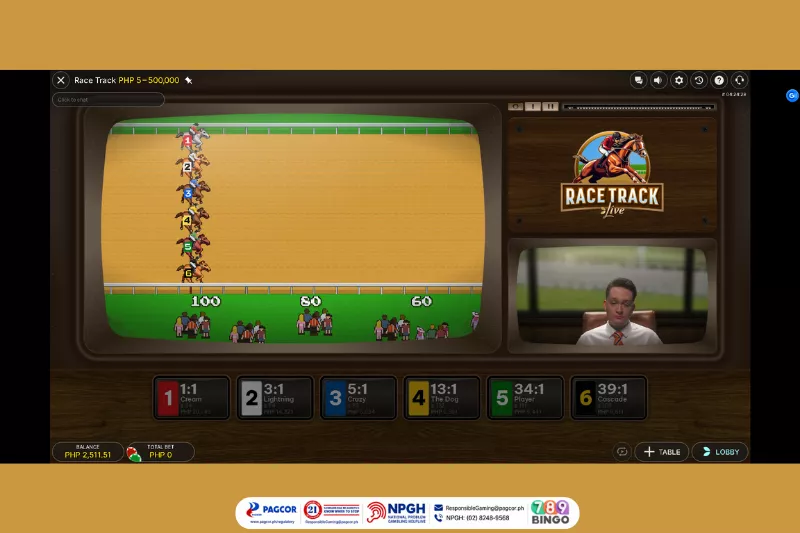
Evolution explicitly describes Race Track as high volatility. That profile is consistent with a payout ladder where favorites may return only 1:1 to 3:1 while rare outsiders can reach 89:1, so short sessions can produce uneven results even when the published theoretical RTP remains unchanged.
Use smaller relative stakes if you want the bankroll to cover more races. Set both a per-race budget and a session cap, because placing wagers on several runners can increase turnover much faster than the value shown on any single betting spot suggests.
Do not raise the next stake because a favorite lost, because an outsider almost won, or because one racer has underperformed its theoretical rate in the recent-history panel. An RNG probability model does not create a debt that the next round must repay.
Avoid using money needed for rent, food, bills, debt payments, savings, or other essentials. Deposit limits, session limits, timeouts and self-exclusion tools can help maintain boundaries when play no longer follows the budget set before the session.
Gambling can be addictive; know when to stop. The combination of short rounds, changing prices and large outsider payouts can encourage rapid repeat wagering, so session time matters alongside stake size.
Frequently Asked Questions
What is the RTP of Evolution Race Track?
Evolution publishes an optimal theoretical RTP of 96.00% for Race Track. The percentage describes long-run theoretical return under the provider's model and does not mean a single session, individual horse, or specific race will return 96% of money wagered.
What is the largest published Race Track payout?
Evolution's factsheet lists Moon Shot at 89:1, the highest payout in the published 50-runner horse table for this casino game online.
That figure is best described as the highest listed racer payout rather than a universal maximum win, because only six selected runners appear in a round and operator-level payout limits may also apply.
Can Race Track statistics predict the next winner?
No verified provider source states that the statistics predict the next race. All Horses shows the last 100 results against theoretical probabilities and Tipster's Choice highlights historical overperformance, but past deviation does not force the RNG to produce a compensating result next.
Where Race Track Fits at 789Bingo
Race Track belongs naturally beside Evolution’s presenter-led and hybrid game-show products, but its structure is simpler than wheel games with layered bonuses. Six racers appear, the odds are shown, you choose one or more potential winners, and the RNG determines which probability-weighted runner crosses first.
Its real point of difference is the moving lineup drawn from 50 fictional racers. Because the six selected entries change from race to race, the strength order and payouts create a new favorite-to-outsider profile each time instead of repeating one permanent six-runner field.
Players who like fast prediction games can compare that casino game online structure with Marble Race, dice titles, baccarat variants and other products in the 789Bingo live casino collection. The important takeaway is that Race Track combines dynamic fixed payouts with probability-weighted RNG results, while recent statistics remain descriptive rather than predictive.
Treat every round as a fresh wagering decision, not a continuation of a streak that needs to correct itself. That approach does not remove the house edge, but it keeps the game’s 96.00% theoretical return, high volatility and 1:1-to-89:1 payout ladder in the proper context.
789Bingo is committed to Responsible Gaming. Underage gambling is prohibited; gaming is strictly for eligible persons aged 21 and above. If you or someone you know has a gambling problem, contact the 24/7 National Problem Gambling Helpline at (02) 8248-9568 or PAGCOR at [email protected] . Gambling can be addictive; know when to stop.













Leave a Reply